Introducing Task Models: Personalized Intelligence for Real Work

Travis Chauvin
Co-Founder & Head of AI Systems
AI models are becoming capable of doing almost anything.
Most work does not require everything.
A document pipeline does not need a model prepared to answer every question in every profession. A code-review system does not need to be an expert in unrelated fields. A support workflow does not need the full breadth of a frontier AI model every time it classifies a request, retrieves the right policy, or prepares a response.
It needs reliable intelligence for the job in front of it.
That is why we are introducing Ora Task Models.
Task Models are smaller AI models specialized, evaluated, and packaged to perform a defined job. Depending on the workload, they can range from compact models below one billion parameters to more capable models of roughly 20 billion parameters. Each one is selected and trained around the task, output standard, privacy requirements, and hardware that matter to the organization using it.
They are not intended to know everything. They are intended to be very good at the work they were built to do.
Ora Task Models are available now for teams and enterprises through custom partnerships. We work directly with each organization to define the use case, establish the required quality, create and validate the model, and plan its deployment on suitable local, edge, or private infrastructure.
1. The largest model is not always the right model
Frontier AI models are remarkable generalists. They can move between research, writing, coding, analysis, mathematics, and open-ended conversation without being redesigned for each request.
That breadth is valuable. It also comes with a large computational and operational footprint.
Many business workloads are different. They repeat. Their inputs follow recognizable patterns. Their outputs have known formats. Their errors can be categorized. Their success can be tested against examples drawn from the real workflow.
Consider tasks such as:
Extracting and normalizing information from recurring documents
Classifying and routing operational requests
Drafting responses under a defined policy and tone
Reviewing code against repository-specific conventions
Turning internal source material into structured reports
Checking an output against a schema, procedure, or compliance rule
Running a focused capability on a workstation, private server, or edge system
Sending every instance of that work to the largest available model can be unnecessary. It can introduce recurring inference costs, external data processing, network dependence, and infrastructure that is difficult to control.
Using an unmodified small model creates the opposite problem. It may be affordable and practical to run privately, but it may not be reliable enough for the work.
Task Models are designed to close that gap.
2. What a Task Model is
A Task Model is personalized intelligence for a defined workload.
"Personalized" in this context does not mean a generic chatbot that remembers a few preferences. It means that the model itself is adapted around a task, team, workflow, output standard, and operating environment.
Ora begins with a smaller base AI model that has the capacity and architecture required for the job. We then improve its behavior using task-specific examples, carefully structured demonstrations, corrections from stronger teacher models where appropriate, hard cases, and retention data that protects useful base capabilities.
The result is a model whose capacity is concentrated on the patterns and decisions that matter to the customer.
This is more than prompt engineering. A prompt can guide an existing model, but it does not change what the model has learned. A Task Model is trained so that the desired behavior becomes part of the model itself.
It is also more than making a model smaller through quantization. Compression can make a model easier to deploy, but it does not automatically make that model better at a particular job. Task specialization determines what the intelligence is good at. Ora's compilation, packaging, and runtime technology determine how that intelligence can be delivered and operated on supported hardware.
3. Why specialization can matter more than scale
Model size is important, but it is not the only source of capability.
Training data, task definition, model architecture, verification, and the match between training and deployment all matter. When a problem is narrow and measurable, a smaller model can sometimes outperform a much larger general-purpose model on that specific problem.
This effect has already appeared in published research.
The Goat research project fine-tuned a 7-billion-parameter model for arithmetic and reported stronger results than GPT-4 across its evaluated arithmetic tasks, while matching or surpassing few-shot PaLM-540B on the relevant benchmark. Gorilla specialized a smaller model for API-call generation and reported higher accuracy than GPT-4 on its API benchmark. The phi-1 research showed how a 1.3-billion-parameter coding model trained on carefully selected and synthetically generated material could compete with substantially larger code models on focused evaluations.
These results do not mean that the smaller models were universally more capable. They do not make frontier AI unnecessary. They demonstrate a narrower principle:
When the task is constrained, the training signal is excellent, and success is measured on that task, specialization can matter more than total parameter count.
That principle is central to Task Models.
We do not assume that a smaller model will outperform a frontier AI model simply because it has been fine-tuned. The improvement must be demonstrated on held-out work that represents the real use case. If the model does not meet the required standard, it is not ready for that deployment.
4. How Ora creates a Task Model
The customer experience should be straightforward because the difficult work happens during model development and validation.
Define the job
We begin with the workflow rather than the model.
What information will the model receive? What should it produce? Which errors are unacceptable? Does the output need to follow a schema? How much context is required? What latency and throughput does the deployment need? Where will inference run? When must a human remain in the loop?
"Make the model better" is not a testable objective. A Task Model needs a concrete acceptance standard.
Select the right base model
We select a base AI model with the appropriate capacity, architecture, language coverage, context behavior, license, and hardware fit.
The goal is not always to choose the smallest possible model. It is to choose the smallest model that can reliably reach the required quality. A tightly constrained edge workflow may fit a sub-1B model. A task involving deeper reasoning, broader domain knowledge, or more sophisticated output may require a model in the 4B, 8B, or higher range.
The workload decides the model class, not the other way around.
Build the teaching set
A strong Task Model depends on a strong teaching set.
Depending on the engagement, this can combine:
High-quality demonstrations of the desired behavior
Corrective examples for cases the base model handles poorly
Structured reasoning and worked solutions when reasoning is genuinely required
Direct, concise answers when the task does not need a long explanation
Hard cases, counterexamples, and known production failure modes
Format-specific examples reflecting the systems that consume the output
Retention examples that protect instruction following, language quality, and foundational knowledge the task still requires
Where appropriate, a frontier AI model can act as a teacher. It can generate worked demonstrations, critique weaker attempts, or provide corrected solutions that help the smaller model learn better task behavior.
The goal is not to copy the frontier model's complete intelligence into a much smaller architecture. That is not realistic. The goal is to transfer the behavior that matters for the selected task.
Distill and specialize
The base model is trained on the teaching set so that the target behavior becomes repeatable.
Task-specific examples teach the model where it needs to improve. Retention examples prevent that specialization from unnecessarily damaging useful existing abilities. These objectives do not conflict: one concentrates the model on the new job, while the other protects the foundation that job depends on.
The training process may require several controlled iterations. More data or more training is not automatically better. The model has to improve on the target task without simply imitating a response template, memorizing the training set, or becoming less reliable elsewhere.
Evaluate the result
We compare the Task Model with its original base model on held-out examples that were not used for training.
The exact evaluation depends on the workflow, but it can include:
Task accuracy or completion rate
Output-format compliance
Performance across difficulty levels and edge cases
Hallucination or unsupported-claim rates
Human review against the organization's quality standard
Latency, throughput, memory use, and storage requirements
Regression checks for useful base capabilities
Broad public benchmarks can provide context, but they are not enough. A Task Model is a success only if it performs the customer's actual work reliably.
Prepare the deployment
Once the model passes its acceptance tests, Ora prepares it for the intended environment.
That may involve selecting an appropriate precision, compiling or packaging the model for a hardware profile, configuring memory and cache behavior, and defining how the model will be accessed by the customer's systems.
Compression is an option, not a requirement. If the target hardware can run a higher-precision model and that is the best quality choice, the model can remain at higher precision. If a smaller representation is required, optimization must remain inside the quality threshold established for the task.
5. Built around the organization's real workflow
Task Models are not sold as interchangeable files in a public catalog.
They are created through a direct partnership between Ora and the customer because the most important parts of the product are specific to the organization:
The task definition
The expected inputs and outputs
The quality and safety requirements
The evaluation data
The deployment hardware
The integration surface
The support and update plan
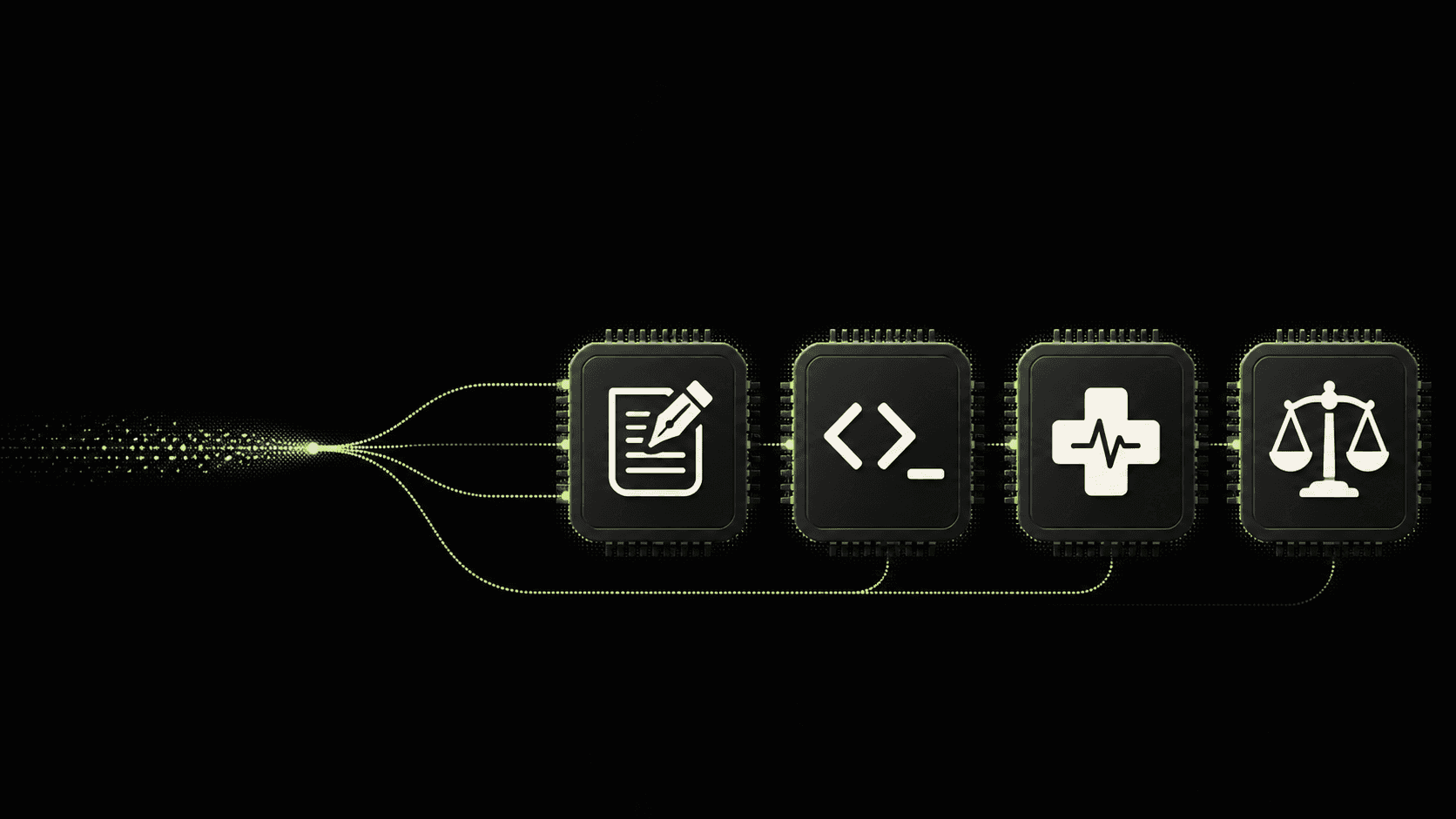
One team may need a compact model that converts thousands of recurring documents into a strict internal schema. Another may need a private coding model that understands one repository and its engineering conventions. Another may need a controlled assistant that applies internal procedures to operational cases and escalates uncertain decisions.
Those systems should not be evaluated by the same generic score. Each Task Model needs an acceptance process that reflects the work it will perform.
This also makes the commercial relationship different from purchasing access to a general-purpose API. Ora and the customer define a custom engagement, determine the development and deployment requirements, and agree on the appropriate partnership or contract.
6. Private deployment is part of the design
Task Models are intended to make organization-controlled AI practical.
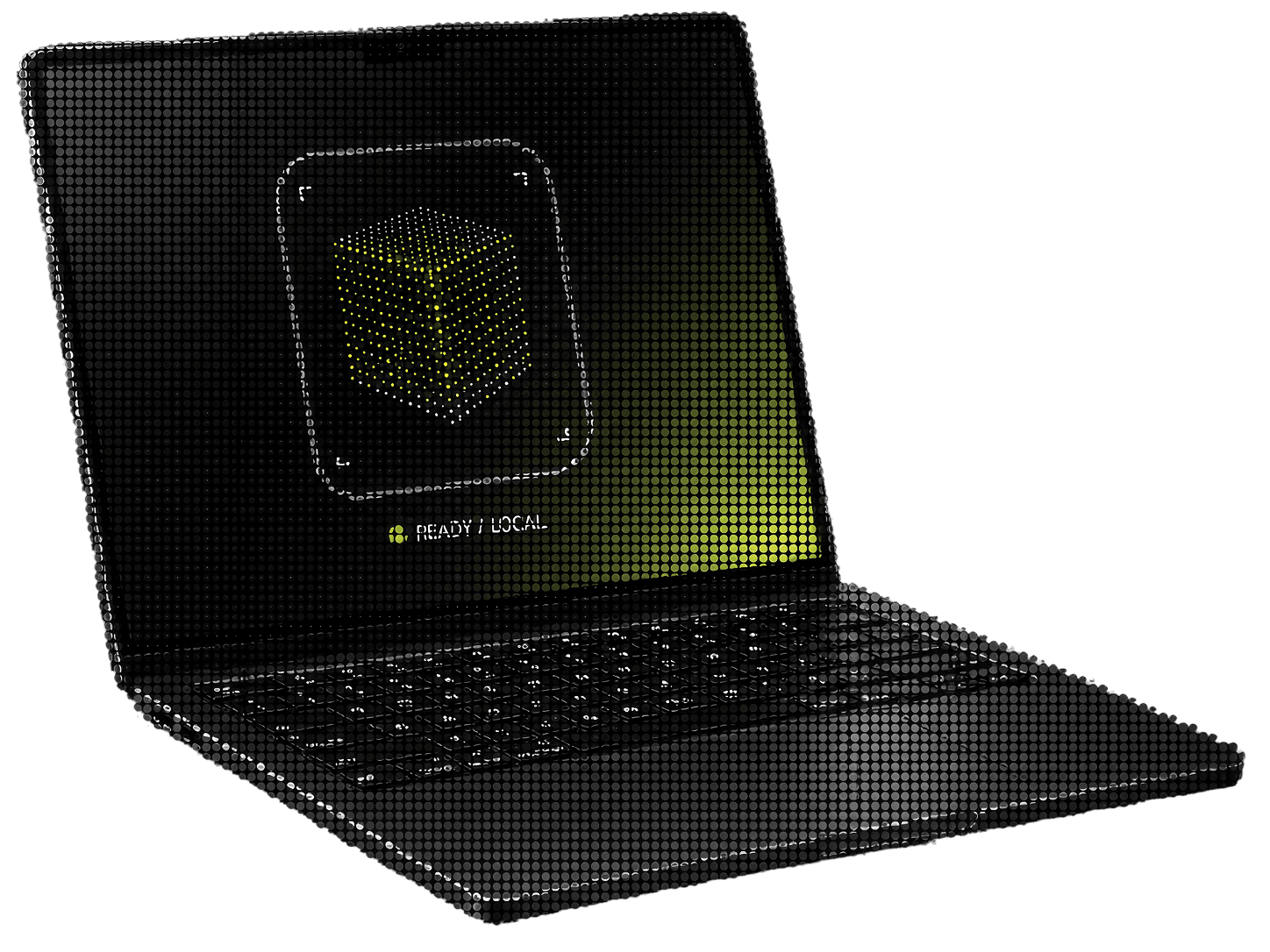
Because they are smaller than frontier-scale systems, they can be suitable for local workstations, private servers, edge systems, or other infrastructure selected for the engagement. This can keep supported inference workloads closer to internal documents, source code, operational systems, and other sensitive data.
Smaller models can also reduce compute requirements, lower dependence on per-request cloud inference, and make capacity planning more predictable.
The exact data path still matters.
We do not describe every Task Model engagement as automatically offline or private in the same way. Model development, updates, optional integrations, and remote management can have different requirements. Ora and the customer define where training data is processed, where the finished model runs, which services it can access, and what operational controls are required.
Privacy is not a label attached to a model file. It is a property of the complete system and how that system is operated.
7. Task Models have honest limits
A Task Model is not a miniature frontier AI model.
The model will be strongest inside the task and data distribution it was built to handle. It may perform poorly when a request falls outside that scope. A model trained for document extraction should not be treated as an open-ended research assistant. A model trained around one codebase should not automatically be trusted to review every language or architecture.
Larger frontier AI models will remain the right choice for many workloads, including broad research, highly variable reasoning, extreme context requirements, rapidly changing knowledge, and requests that cannot be defined in advance.
Some workflows will use both. A Task Model can handle the repeated, measurable workload locally or privately, while genuinely unusual cases are escalated to a larger system or a human reviewer.
We think that division is a strength.
The future of AI infrastructure will not be one model performing every task. It will be a mix of general-purpose systems and specialized intelligence, each used where it makes operational sense.
8. Available now for teams and enterprises
Ora Task Models are available now through custom partnerships for teams and enterprises.
We are working with organizations that have a defined, repeated workflow; a clear reason to run intelligence on local or private infrastructure; and a quality standard that can be measured. The engagement covers the task definition, model selection, data and teaching-set design, training, evaluation, deployment planning, and ongoing support required for the project.
There is no universal Task Model package because there is no universal business task. The process begins with a conversation about the work your team wants the model to perform.
If your organization has a repeated AI workload that should be faster, more private, more focused, or less dependent on frontier-scale cloud inference, contact the Ora team.
We will help determine whether the task is a good fit, what model class it requires, how success should be evaluated, and what a custom partnership would involve.
The largest model is not always the most useful one.
The useful model is the one that does the work.
About the author
Travis Chauvin
Co-Founder & Head of AI Systems
Travis Chauvin is a Co-Founder and Head of AI Systems at Ora Frontier, where he is building the direction of AI research, focusing on making powerful local AI and personalized intelligence more accessible through consumer-grade hardware.